
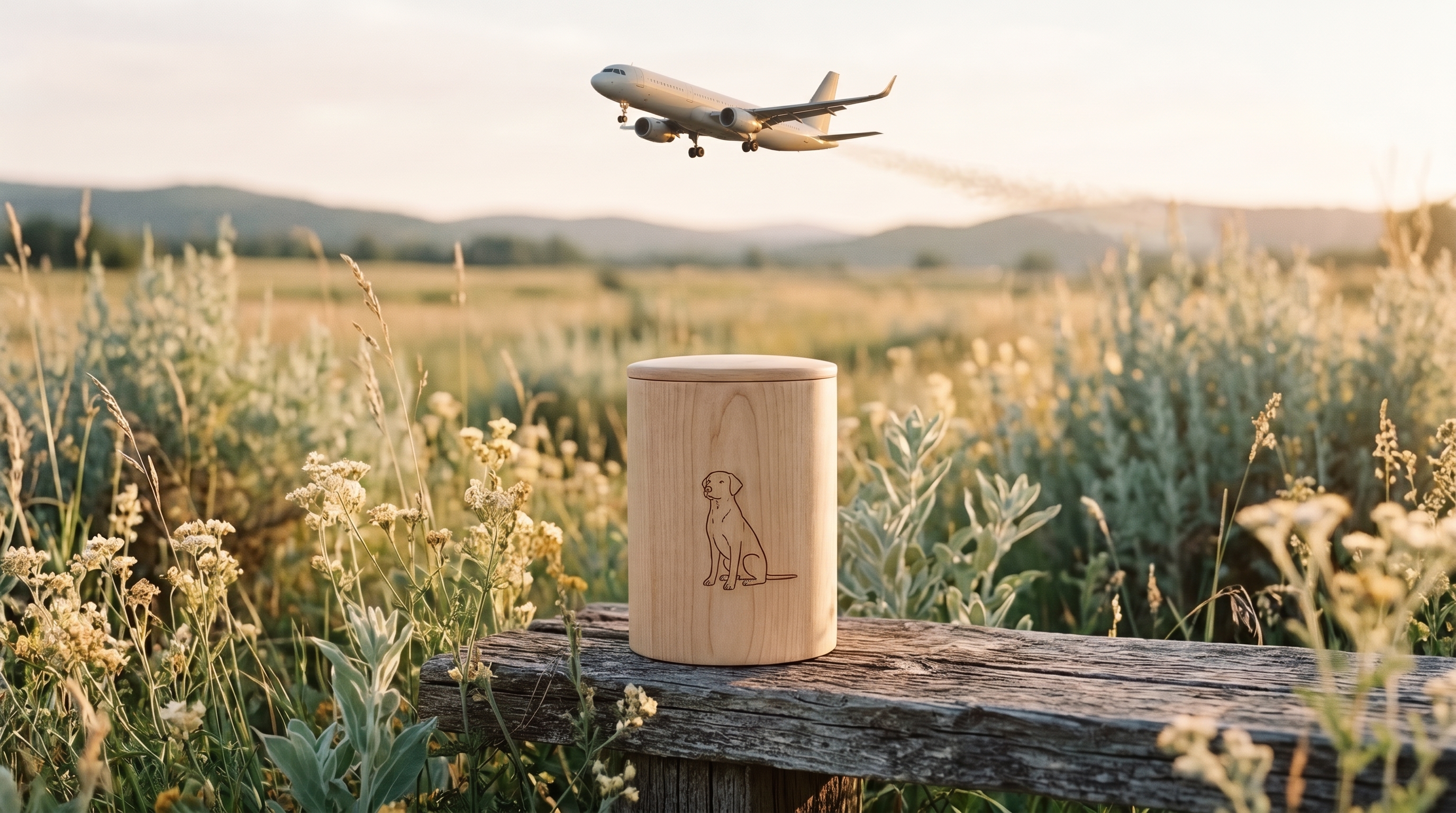
Carrying your pet's ashes on a flight is not an ordinary travel day. Maybe you're bringing them home after a move, or taking them to the lake where they loved to swim. Whatever brought you here, it makes sense to want this part of the trip to go gently.
The good news is that it usually does. With the right container and a few minutes of planning, you can keep your companion close from the security line all the way to your seat, without surprises along the way.
Can you take pet ashes on a plane in the United States?
Yes. The Transportation Security Administration allows cremated remains, human or pet, through airport security. You don't need a special permit, and TSA doesn't charge anything to screen them. Families do this every day, and officers are used to it.
Two sets of rules shape your trip. TSA decides what gets through the checkpoint, and your airline decides how the ashes travel once you're on board. Most of the time both answers are friendly ones, but they aren't always the same, so it helps to check both before you fly.
If anything is going to slow you down, it's the container itself, not the paperwork or the airline. Get that one choice right and the rest of the day tends to fall into place.
How airport security screens cremated remains
Why the X ray needs to see inside
Every urn goes through the X ray machine along with the rest of your carry on bag. The officer needs a clear image to confirm there's nothing inside but ashes. Thick metal, stone, or dense ceramic can block that view completely.
When the picture isn't clear, officers may try other non invasive ways to resolve it. If they still can't clear the container, it won't be allowed past the checkpoint. That's a hard moment to face at the airport, which is why the container you choose matters so much.
Will TSA open the urn?
No. TSA officers will not open a container of cremated remains, even if you ask them to. It's a matter of respect for what's inside, and it's firm policy.
You may come across airline pages that mention a physical inspection, which understandably causes confusion. The safest way to think about it is simple. The X ray is the only real chance your container gets, so bring one it can see through.
Choosing a container that will pass security
Materials that pass and materials that may not
TSA suggests traveling with lighter materials such as wood or plastic. Here's how the most common options tend to fare at the checkpoint, so you can decide before you start packing.
| Material | Likely to clear the X ray | What to know |
|---|---|---|
| Plastic (crematory container) | Very likely | Usually the easiest option and often what your provider already gave you |
| Cardboard | Very likely | Light and simple, though worth protecting inside your bag |
| Wood | Likely | Thin walls work best, so avoid metal hinges or engraved plates |
| Biodegradable or cloth | Likely | A good fit if you plan to scatter the ashes at your destination |
| Ceramic or porcelain | Uncertain | Thick glazes and dense walls can block the image |
| Stone or marble | Unlikely | Usually too dense to screen |
| Metal (brass, bronze, steel) | Unlikely | The most common reason urns are turned away |
No material comes with a guarantee, and two urns made of the same thing can screen differently. When in doubt, lighter and plainer is always the safer bet. If your provider sent the ashes home in a plastic container, that's usually the one to bring.
Protecting your permanent urn
If your pet's urn is a heavy keepsake, consider leaving it at home and flying with the ashes in their original temporary container. Many families do exactly this and move the ashes back once they arrive.
If you'd like the permanent urn to make the trip too, wrap it well and pack it in the middle of a bag, cushioned by soft clothing. For extra peace of mind, slip the inner bag of ashes into a second sealed bag before it goes into your carry on. It takes a minute and protects against any accidental spill.
Should pet ashes go in your carry on or checked bag?
TSA permits cremated remains in both, but it recommends keeping them with you. Some airlines, Southwest among them, won't accept remains in checked baggage at all.
There are gentler reasons too. Checked bags can be delayed, lost, or handled roughly, and none of that is something you want to worry about with your pet's ashes. When they ride in the cabin, you always know where they are.
Plan for the container to fit under the seat in front of you or in the overhead bin. Some airlines count it as one of your carry on items, so leave a little room in your allowance when you pack.
Airline policies for pet ashes
Airline rules change, and not every carrier treats pet remains the same way it treats human remains. These are the policies a few airlines publish as of late 2026.
| Airline | Accepts pet ashes | How they can travel | Good to know |
|---|---|---|---|
| Southwest | Yes | Carry on only | Recommends the crematory's plastic or cardboard container |
| JetBlue | No | Not accepted | Its cremated remains policy covers human remains only |
| Alaska Airlines | Confirm when booking | Carry on or checked | Published policy refers to human remains |
| Breeze Airways | Yes | Confirm when booking | Accepts cremated human and animal remains only |
| Avianca | Yes | In the cabin only | Requires the cremation certificate and a cardboard, plastic, or wood urn |
JetBlue is the one that surprises people, so check twice if you're flying with them. If you have a connecting flight on a partner airline, that carrier's rules may apply for that leg. When your airline isn't listed here, a short call before you book is the most reliable way to know what to expect.
What to bring to the airport
A little preparation turns screening into something you'll barely notice. Before you leave home, take a moment to gather these few things and keep them together in your carry on.
1. Your certificate of cremation from the crematory, kept somewhere easy to reach
2. A container that can clear the X ray, ideally the original temporary one
3. Extra time at security, so you never feel rushed
4. A quiet word for the officer letting them know you're carrying your pet's ashes
5. A note of your airline's policy, in case anyone at the gate has questions
Do you need to declare pet ashes?
On domestic flights there's no formal declaration. Telling the TSA officer before your bag goes through is still a kind step, and it usually makes the moment easier for everyone involved.
International trips are different. Many countries expect you to declare cremated remains at customs when you arrive, so keep your documents in your carry on rather than in a checked bag.
How much does it cost to take ashes on a plane?
TSA doesn't charge anything to screen cremated remains. Most airlines don't add a fee either when the ashes travel with you in the cabin, although the container may use up one of your carry on spots. Shipping ashes as air cargo is a separate service and does come with its own cost.
Can you take pet ashes on a plane internationally?
Usually you can, but each country sets its own rules for bringing cremated remains across the border. Contact the embassy or consulate of your destination well ahead of time and ask exactly what they'll need from you.
Don't forget about layovers. If you're connecting through another country, its rules may apply too. You might be asked for the cremation certificate, veterinary paperwork, a customs declaration, or a specific kind of sealed container. Starting a few weeks early gives you room to gather everything calmly.
Your airline may have its own international requirements as well, from container rules to paperwork checked at the counter. Once you've heard from the embassy, confirm the details with the airline so nothing catches you off guard.
Other ways to keep your pet close while you travel
Flying with the full urn isn't the only option. Many people carry a small portion of ashes in a keepsake urn or a piece of memorial jewelry and leave the rest safely at home. It's a lighter way to travel, and it still feels like bringing them along.
If you'd rather not carry the ashes through an airport at all, you can mail them ahead. In the United States, the Postal Service is the only carrier that ships cremated remains, and it requires Priority Mail Express with its special cremated remains box.
And sometimes the right choice is to leave the ashes where they rest now. That's a loving decision too, and it doesn't take anything away from the bond you shared.
Caring for yourself along the way
Travel days with your pet's ashes can stir up feelings you didn't expect. A security line, a kind word from a flight attendant, or the quiet moment after takeoff can bring it all back. That's normal, and it's okay to let yourself feel it.
Give yourself extra time and a little grace. If grief feels heavy before or after your trip, the ASPCA Pet Loss Hotline is there to listen at (877) 474 3310. Talking with someone who understands can make a real difference.
Find a provider near you
If you still need a travel friendly container, or you're arranging cremation before a move, a local provider can help with both. Many offer temporary urns made for air travel and can give you a certificate of cremation to carry with you.
Find a provider near you by browsing our state and city directory pages. Wherever you're headed, you don't have to plan this part alone.